
"shaded cultivation"
2000 article(s) found
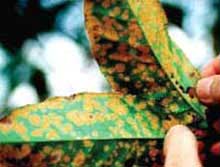
Knowledge points of coffee cultivation: factors affecting coffee tree growth and coffee bean quality leaf rust
Image: the shift of google from traditional shading to sun exposure may be the main cause of large outbreaks of coffee leaf rust on coffee farms in Central America and Mexico. Coffee leaf rust was discovered in Central America as early as 40 years ago, but recent outbreaks in Central America (Colombia, Costa Rica, El Salvador, Guatemala, Nicaragua) and Mexico are by far the most

Coffee beans grow in specific locations, coffee beans grow in interlocking conditions.
Professional coffee knowledge exchange More coffee bean information Please pay attention to coffee workshop (Weixin Official Accounts cafe_style) Qianjie-coffee planting introduction Coffee tree origin in Ethiopia, Africa Coffee tree in botany, belongs to the Rubiaceae coffee subgenus evergreen trees, and commonly known as coffee beans, in fact, coffee tree fruit seeds, only because the shape like beans,

Flavor description characteristics of Panamanian long-tailed cuckoo coffee beans
Flavor description characteristics of Panamanian long-tailed cuckoo coffee beans taste treatment method introduces three ways of plantation: sunshine plantation, full shade plantation and semi-shade plantation. Plantations with more than 50 plants per hectare are fully shaded plantations, 25-50 plants are semi-shaded plantations, and less than 25 plants are called sunshine plantations. The plantation shade and shade of the two neighbors with the same planting conditions.
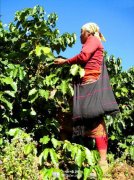
Cultivation techniques of High-quality Coffee trees
1. The cultivation of strong coffee seedlings 1. The selection of nursery land is close to water source, convenient for transportation, loam or sandy loam with loose and fertile soil, deep soil layer, good drainage, paddy field with PH value of 66.5 or early nursery land, and close to coffee garden. Turn over 20cm30cm meters to make fire and burn the soil, hoe fine and remove stones, branches and roots before sieving, or use mountain humus, add 8-

What is Arabica mother coffee? Introduction to Arabica Coffee varieties
Professional coffee knowledge exchange more coffee bean information Please pay attention to the coffee workshop (Wechat official account cafe_style) Coffee can be divided into three main varieties, namely, Arabica (Coffea arabica), Robusta Coffea canephora (Robusta) and Coffea liberica. Arabica is the main force of boutique coffee, suitable for growing at higher altitude

Arabica Coffee Bean Variety-Iron pickup Coffee beans are dry and wet describe how the tin card tastes?
Professional coffee knowledge exchange more coffee bean information please follow the coffee workshop (Wechat official account cafe_style) the following is to introduce several Arabica improved varieties of iron pickup card coffee beans (Typica) is the closest to the original species, widely cultivated in Central and South America, long beans, with excellent aroma and sour taste, low yield because of its resistance to leaf rust (coffee tree)

Coffee cultivation techniques
Coffee, cocoa and tea are called the three major beverages in the world, and their output, consumption and output value all rank first. In addition to being used as a beverage, coffee can also extract caffeine and coffee oil; in medicine, it can be used as an anesthetic, stimulant and diuretic cardiotonic agent.

The basic altitude of coffee planting technology is the most suitable for planting.
Coffee planting technology the origin of coffee trees is in Ethiopia, Africa. In botany, coffee trees belong to the evergreen trees of the subgenus Rubiaceae, and coffee beans, commonly known as coffee beans, are the seeds of the fruit of coffee trees, just because they are shaped like beans, so they are called coffee beans. Climate is the decisive factor for coffee cultivation. Coffee trees are only suitable for growing in the tropics or subtropics.
Details of growing coffee
1. The cultivation of strong coffee seedlings 1. The selection of nursery land is close to water source, convenient for transportation, loam or sandy loam with loose and fertile soil, deep soil layer, good drainage, paddy field with PH value of 66.5 or early nursery land, and close to coffee garden. Turn over 20cm30cm meters to make fire and burn the soil, hoe fine and remove stones, branches and roots before sieving, or use mountain humus, add 8-

Peruvian Coffee Bean Growing Areas Elevation Climate Flavor Description
Follow Coffee Review (Weixin Official Accounts vdailycom ) and find a beautiful cafe to open its own shop Peru, fully known as the Republic of Peru (Spanish: Repblica del Per), is a country in western South America, bordered by Ecuador and Colombia in the north, Brazil and Bolivia in the east, Chile in the south and the Pacific Ocean in the west. It is a member of the Union of South American Nations. to
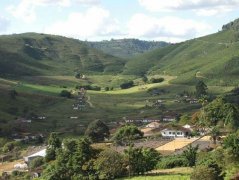
How to grow Coffee quality will be better Coffee planting Micro-environment introduction
How to grow coffee quality will be better coffee planting microenvironment introduces the origin of coffee trees in Ethiopia, Africa. In botany, coffee trees belong to the evergreen trees of the subgenus Rubiaceae, and coffee beans, commonly known as coffee beans, are the seeds of the fruit of coffee trees, just because they are shaped like beans, so they are called coffee beans. Climate is the decision of coffee cultivation.

How to grow coffee beans? the planting conditions of coffee beans
Professional coffee knowledge exchange more coffee bean information please follow Coffee Workshop (Wechat official account cafe_style) Street-Coffee planting conditions brief introduction Coffee Tree Origin in Ethiopia, Africa. In botany, coffee tree belongs to the evergreen tree of the subgenus Rubiaceae, and coffee beans, commonly known as coffee beans, are the seeds of the fruit of coffee trees, just because they are shaped like beans.

Introduction of Yunnan small round grain coffee grinding scale flavor description and taste treatment method
Yunnan small round grain coffee grinding scale flavor description variety introduction coffee is a long-term economic crop, woodland reclamation must be long-term planning, good planning, before reclamation must do a good job of road, shed, fertilizer pool design. When the woodland is reclaimed, the shade trees should be selected so that the coffee woodland after planting has 3040% shade, and then it will be adjusted to 2030%. Water must be done well in planning and design.

Introduction to the flavor and taste of Salvadoran coffee beans
The lubricated Salvadoran coffee has an excellent taste and is as smooth as cream chocolate.

A brief introduction to the altitude and climate of the cultivation of Mazu coffee in Alishan, Taiwan
In 1941 (the 16th year of Rizhaohe), most of the raw beans were shipped back to Japan. The planting area of coffee in Taiwan has reached 75 hectares, and it was called the largest coffee factory in the far East in its heyday. In 1945 (Rizhaohe 20 years), the area of coffee cultivation in Taiwan expanded to 113 hectares after the war. After the surrender of Japan, Taiwan was restored, and the national government strongly advocated the reclamation of fertile land and the cultivation of cash crops.

Introduction to the treatment methods of the grinding degree of the bright acid Esmeralda Manor coffee in Panama
Hartman Manor is located in the Balu volcanic area, the soil is nutrient-rich volcanic soil, the lush virgin forest forms the best shaded cultivation environment, generally speaking, shaded coffee grows slowly and can brew higher sweetness and bright acidity. The alpine microclimate of Chiriqui Volcan has also become the excellent growth base of Hartman coffee.

A brief introduction to the cultivation of high-quality coffee beans in Kenya with rich taste, geographical location, climate and altitude
In addition to the prestigious traditional Arabica coffee, robusta coffee is also produced in the western lowlands of Kenya. Kenya coffee harvest season there are two harvest seasons in Kenya, the main harvest season is from October to December and the secondary harvest season is from May to July. Large coffee processing farms in Kenya usually have independent processing facilities. A large number of small farmers usually pick them by hand.

History of coffee cultivation in Peru Introduction to Peruvian fine coffee beans Flavor Taste Manor producing areas
Peru's coffee cultivation is planned, which greatly increases coffee production. Peruvian coffee tastes mellow, acidity is appropriate, this tepid coffee attitude has made more and more people like it. Peruvian coffee has long been used as one of the blend beans for coffee stability, its rich acidity and mellow smoothness being its most striking characteristics. Peruvian coffee

Cultivation techniques and Biological habits of Coffee Tree
2. Biological habits (1) Botanical characteristics (2) growth and flowering habits (3) requirements for environmental conditions (1) Botanical characteristics 1. Root coffee root is a conic root system, its morphology, distribution and depth vary with agro-technical measures, soil conditions and varieties. In the case of a political party, there is a thick and short main root and many developed lateral roots. According to the observation in Hainan Island

Introduction to the characteristics of Peruvian Fine Coffee Bean Flavor and taste Manor
Peruvian coffee beans are best known for their coffee beans from Chimacha Mayou in the middle and Cusco in the south. In addition, some areas in northern Peru also produce characteristic organic coffee. Organic coffee is made of beans grown in the shade of trees. Although the yield of coffee beans is not high because of the method of planting in the shade, its quality can reach the level of gourmet coffee. This is due to the ability to